



Introduction
In today’s digital era, prolonged use of computers, smartphones, and other digital devices has become unavoidable. This has led to a significant rise in Computer Vision Syndrome (CVS), also known as Digital Eye Strain, among all age groups. Optometrists play a key role in early diagnosis, management, and patient education regarding this condition.
Definition:
Computer Vision Syndrome refers to a group of eye and vision-related problems resulting from prolonged digital screen use. Symptoms occur due to increased visual demands and poor visual ergonomics.
Epidemiology:
Studies suggest that approximately 50–90% of digital device users experience symptoms of CVS. The prevalence is higher among office workers, students, and healthcare professionals.
Etiology and Risk Factors:
- Prolonged screen time (>2 hours continuously)
- Reduced blink rate (up to 60% decrease)
- Poor lighting and glare
- Improper viewing distance and posture
- Uncorrected refractive errors
- Use of contact lenses
- Blue light exposure.
Clinical Features
Ocular Symptoms:
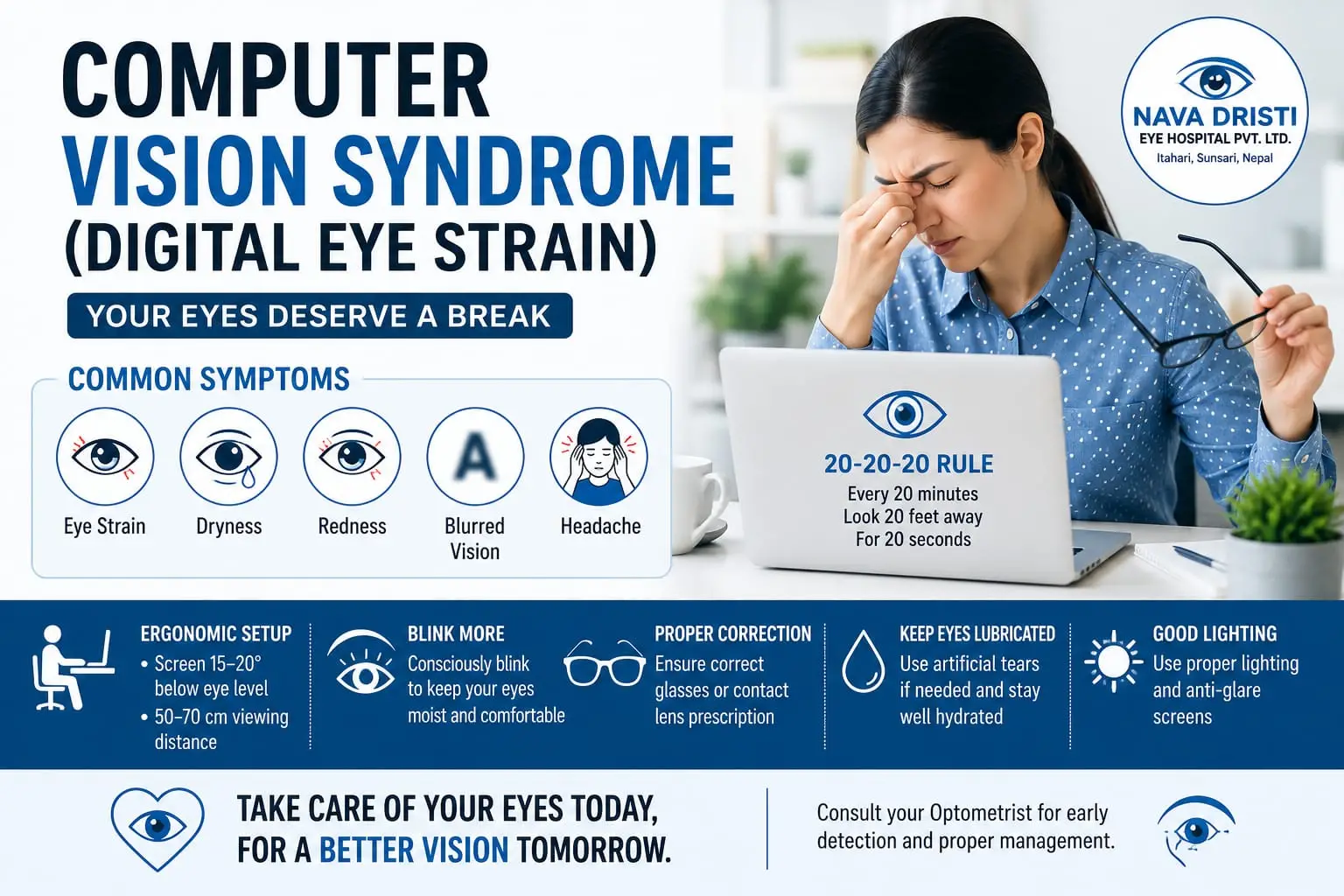
- Eye strain
- Dryness and irritation
- Burning sensation
- Redness
- Blurred or double vision.
Extraocular Symptoms:
- Headache
- Neck and shoulder pain
- General fatigue.
Pathophysiology:
Digital screen use leads to decreased blink rate and incomplete blinking, causing tear film instability and dry eye symptoms. Continuous focusing efforts strain the accommodative system, while glare and contrast issues further increase visual discomfort.
Diagnosis:
- Diagnosis is primarily clinical and includes:
- Detailed patient history (screen time, working conditions)
- Visual acuity testing
- Refraction
- Binocular vision assessment
- Tear film evaluation (TBUT, Schirmer’s test).
- DTE (Detail Tear Examination test).
Management
- Patient Education
- Follow the 20-20-20 rule: Every 20 minutes, look at something 20 feet away for 20 seconds
- Increase conscious blinking
- Maintain proper posture.
- Ergonomic Modifications
- Screen positioned 15–20 degrees below eye level
- Maintain distance of 50–70 cm from screen
- Use anti-glare screens.
- Optical Correction
- Prescribe appropriate refractive correction
- Consider blue light filtering lenses if needed.
- Dry Eye Management
- Artificial tears (lubricating eye drops)
- Environmental modifications (humidifiers).
- Lifestyle Changes
- Limit screen time when possible
- Take frequent breaks.
Role of Optometrist:
Optometrists are the first point of contact for most patients with CVS. Their role includes:
- Early detection
- Proper refractive correction
- Counseling on ergonomic practices
- Management of associated dry eye
Conclusion:
Computer Vision Syndrome is an emerging public health concern due to increasing digital device use. With proper awareness, timely diagnosis, and preventive strategies, optometrists can significantly reduce its impact and improve patients’ quality of life.
Disclaimer
This document is prepared for educational and informational purposes only.The content is intended to increase awareness about Computer Vision Syndrome (Digital Eye Strain) and should not be considered a substitute for professional medical advice, diagnosis, or treatment. Clinical decisions should always be based on individual patient evaluation by a qualified eye care professional.
References
- American Optometric Association (AOA). Computer Vision Syndrome (Digital Eye Strain). 2020.
- Sheppard AL, Wolffsohn JS. Digital eye strain: prevalence, measurement and management. BMJ Open Ophthalmology. 2018.
- Rosenfield M. Computer vision syndrome: a review of ocular causes and potential treatments. Ophthalmic & Physiological Optics. 2011.
- Gowrisankaran S, Sheedy JE. Computer vision syndrome: A review. Work: A Journal of Prevention, Assessment & Rehabilitation. 2015.
- World Health Organization (WHO). Vision and eye health guidelines. 2019.