


Introduction:
As optometrists, we know that a healthy, stable tear film is fundamental not only to ocular comfort but also to visual clarity. Dry eye disease (DED) is far more than a transient annoyance. It is a complex, multifactorial condition affecting the tear film’s delicate three layer structure. Simply put, dry eye occurs when our eyes either do not produce enough tears or when our tears evaporate too quickly. The result is a cascade of symptoms like burning, itching, grittiness, fluctuating vision, and even paradoxical watering as the eye attempts to compensate.
Causes and Risk Factors:
Dry eye disease rarely has a single cause. More often, it results from a combination of factors that disrupt the delicate balance of tear film. Understanding these underlying contributors is essential because treatment depends on identifying why our tear film is unstable. Of these, evaporative dry eye caused by meibomian gland dysfunction (MGD) is the most common form, accounting for nearly 86% of dry eye cases.
Common Risk Factors:
We are more likely to develop dry eye if we have one or more of the following,
Risk Category Specific Factors:
1) Digital & Environmental: Prolonged screen use due to reduced blink rate, low humidity, wind, air conditioning, heating or even smoke exposure.
2) Contact Lenses long term wear: Poor lens hygiene, improper lens, material or fit
3) Medications: Antihistamines, decongestants, antidepressants, diuretics, beta-blockers, hormone replacement therapy, Isotretinoin.
4) Systemic Diseases: Sjögren's syndrome, rheumatoid arthritis, lupus, diabetes, thyroid disorders, rosacea.
5) Ocular & Surgical History Refractive surgeries: (LASIK, PRK – temporary dry eye is common), blepharitis, allergic conjunctivitis.
6) Lifestyle Factors: Insufficient sleep, low omega-3 intake, vitamin A deficiency; smoking.
Complications of Dry Eye:
While occasional dry eye discomfort is common, chronic untreated dry eye disease is not just irritating it can lead to serious ocular surface damage. Complications can range from mild to severe, and they tend to worsen over time if the underlying cause is not addressed.
When our tear film is unstable or insufficient, our cornea loses its primary defence mechanism. Tears do more than lubricate; they provide oxygen, remove debris, and contain antimicrobial proteins. Without a healthy tear film, the following complications may arise :-
Complication Description:
- Eye irritation, persistent burning, scratching, or foreign-body sensation, that interferes with daily activities and sleep.
- Vision problems fluctuating or blurred vision, especially during tasks like reading or using a screen. Light sensitivity (photophobia) is also common.
- Infection Tears normally wash away bacteria and debris. Reduced tear production increases our risk of microbial keratitis (corneal infection), including bacterial, fungal, or viral infections.
- Corneal scarring repeated inflammation and micro-injuries to the cornea can lead to permanent scar tissue, which may obstruct vision.
- Corneal ulcers severe dry eye can cause open sores on the cornea. These are painful, increase infection risk, and require urgent medical treatment.
So When to See an Optometrist Immediately?
Seek prompt care if one experience:
- Sudden worsening of eye pain or redness
- Decreased or hazy vision
- Extreme light sensitivity
- A visible white spot on our cornea
- Discharge accompanied by pain.
Clinical note: Corneal ulcers and scarring are preventable with early and consistent dry eye management. Regular follow-ups even when symptoms feel mild are key to avoiding long term structural damage.
Treatment and Management:
Because dry eye disease has many causes, there is no single cure-all. Treatment typically follows a stepwise approach—starting with simple lifestyle modifications and progressing to prescription therapies or in-office procedures when needed. As an optometrist, my goal is to identify the root cause (e.g., Meibomian gland dysfunction, aqueous deficiency, or environmental factors) and tailor treatment accordingly.
Step 1: Lifestyle and Environmental Modifications.
These are often the first line of defence and can significantly improve mild to moderate dry eye.
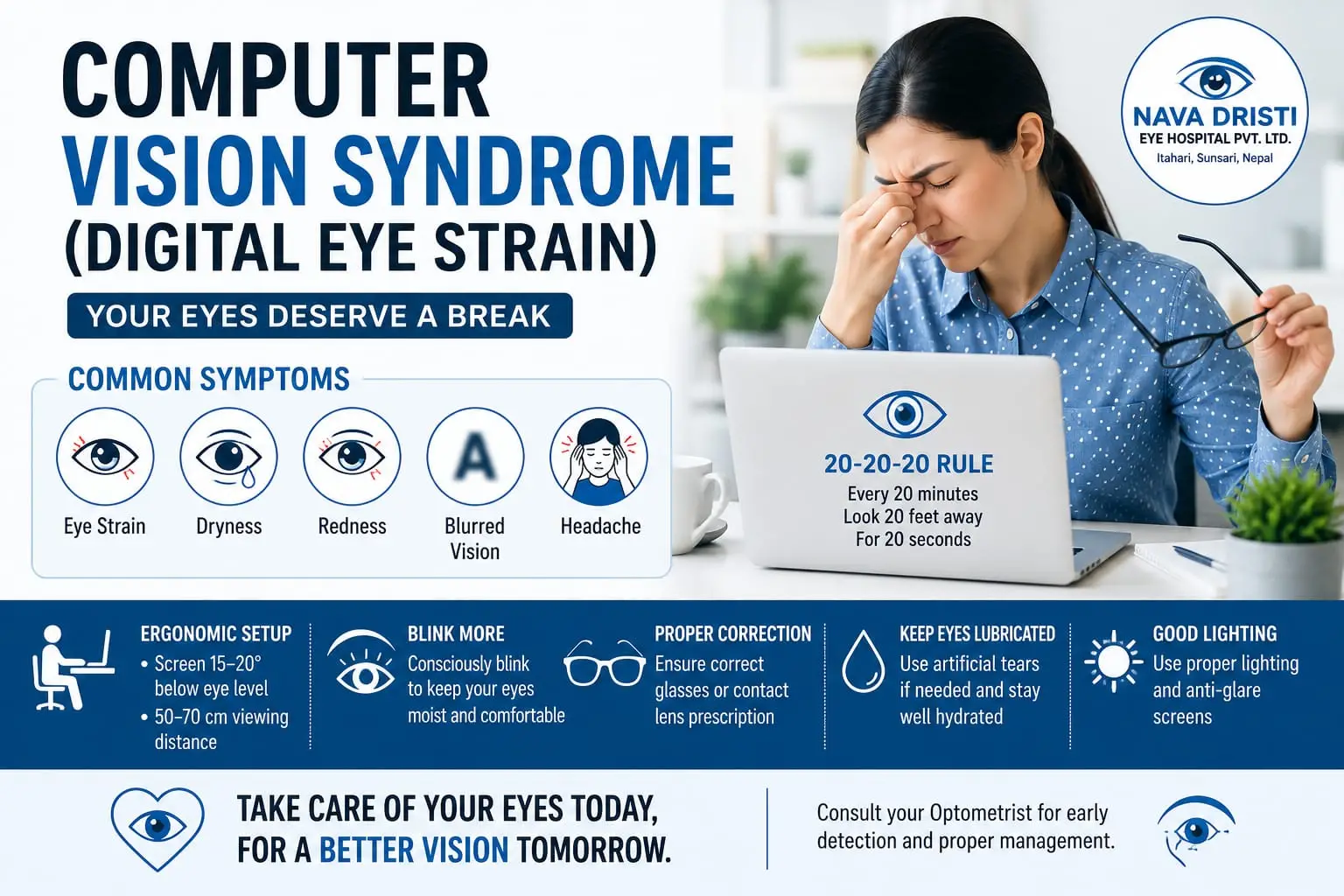
- Blink consciously – When using screens, remember to blink fully and frequently. Consider the "20-20-20 rule": every 20 minutes, look 20 feet away for 20 seconds.
- Increase humidity – Use a humidifier at home or work. Avoid direct air from fans, heaters, or air conditioners blowing toward our eyes.
- Stay hydrated – Drink adequate water throughout the day.
- Dietary adjustments – Increase omega-3 fatty acids (flaxseed, walnuts, fatty fish) to support meibomian gland function.
- Eyelid hygiene – Clean eyelid margins daily with warm compresses and lid wipes, especially if you have blepharitis or MGD.
Step 2: Over-the-Counter (OTC) Options.
Treatment Use Notes:
- Artificial tears: Mild to moderate dry eye Preservative-free vials are best for frequent use (>4 times/day).
- Lubricating gels or ointments: Nighttime use May blur vision temporarily; ideal before sleep.
- Omega-3 supplements: Adjunct therapy Look for re-esterified triglyceride form for better absorption.
- Lid scrubs & warm compresses: Meibomian gland dysfunction Use daily for best results.
Step 3: Prescription Therapies.
If OTC options are insufficient, prescription treatments can help reduce inflammation and stimulate tear production.
- Cyclosporine A (Restasis®, Cequa®) – Reduces ocular surface inflammation; may take 1–3 months to show full effect.
- Lifitegrast (Xiidra®) – Targets T-cell mediated inflammation; faster onset than cyclosporine in some patients.
- Varenicline nasal spray (Tyrvaya®) – Stimulates the trigeminal nerve to increase natural tear production.
- Topical corticosteroids – Short-term use for acute flare-ups; not suitable for long-term management due to risk of increased intraocular pressure and cataract formation.
Step 4: In-Office Procedures
For moderate to severe dry eye refractory to medical therapy, consider these options:
- Punctal plugs – Inserted into tear ducts to slow tear drainage, preserving natural tears on the ocular surface.
- Intense pulsed light (IPL) – Targets meibomian gland dysfunction and rosacea-related dry eye.
- Lipiflow® or TearCare® – Thermal pulsation therapy to unblock and express meibomian glands.
- Scleral contact lenses – For severe dry eye or corneal irregularity; creates a fluid reservoir over the cornea.
Step 5: Managing Underlying Conditions
Treat systemic contributors in coordination with primary care or rheumatology:
- Control blood sugar in diabetic patients.
- Manage autoimmune diseases (Sjögren's, lupus, rheumatoid arthritis).
- Adjust or review medications that cause dryness when possible.
Clinical Takeaway:
Dry eye management is rarely a "one and done" solution. It requires ongoing evaluation and adjustment. What works today may need modification months later. Regular follow-ups, every 3 to 12 months depending on severity, ensure our treatment plan evolves with our condition.
---
Final Note for Patients:
If you have dry eye symptoms, don't wait until complications develop. Schedule a comprehensive dry eye evaluation with our optometrist. Together, we can protect our ocular surface, preserve our vision, and restore our comfort.