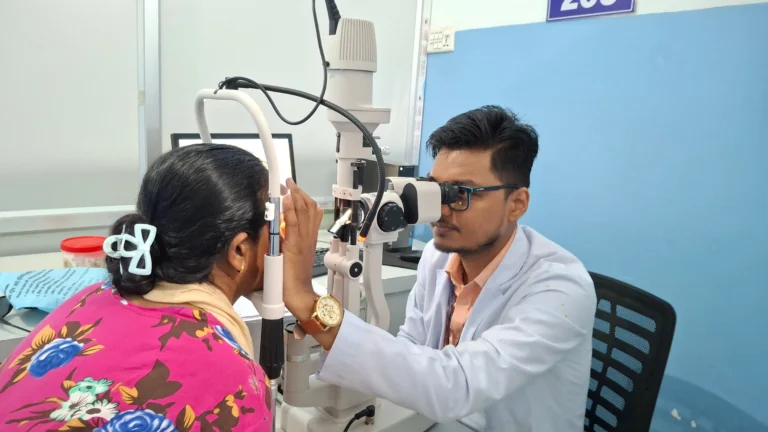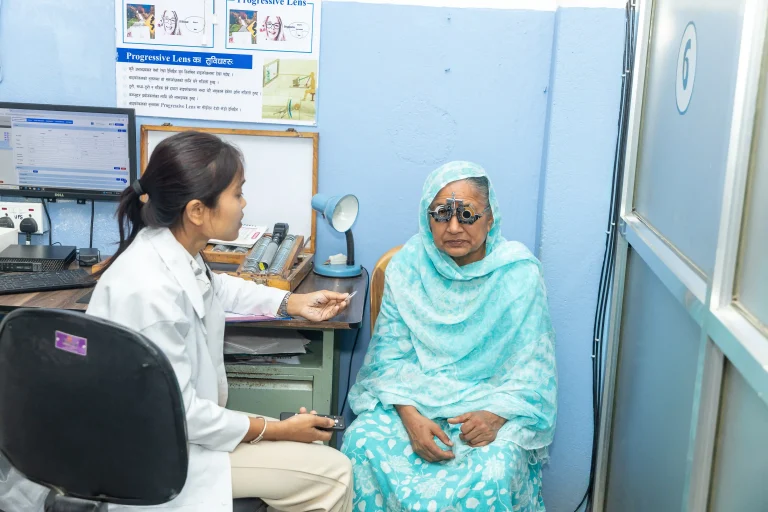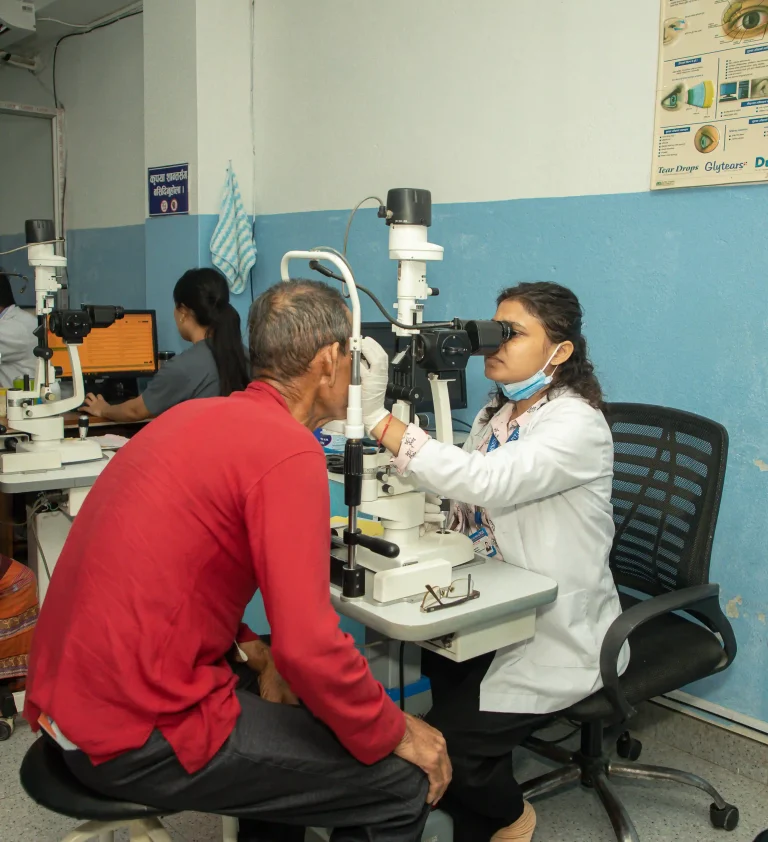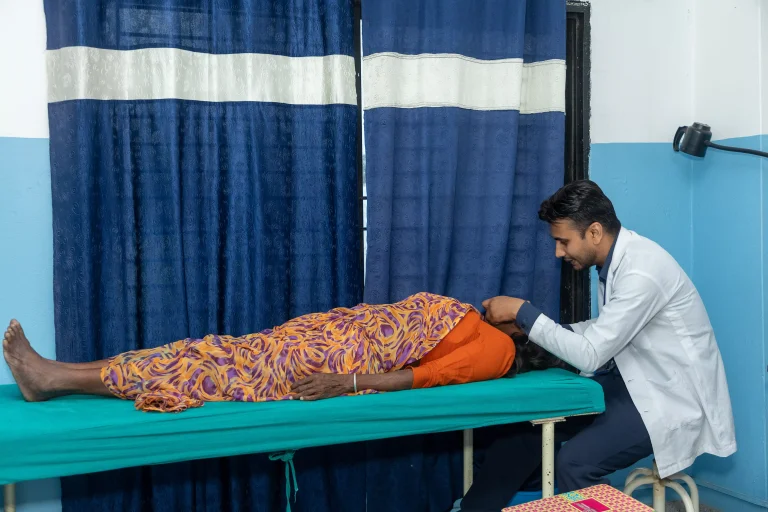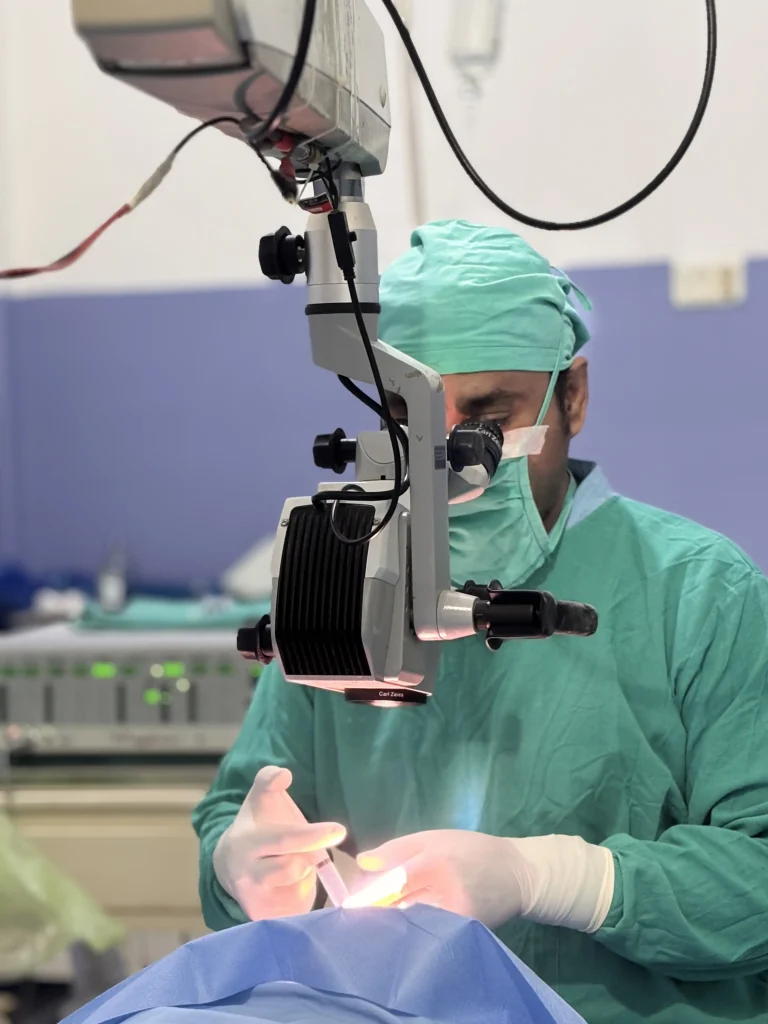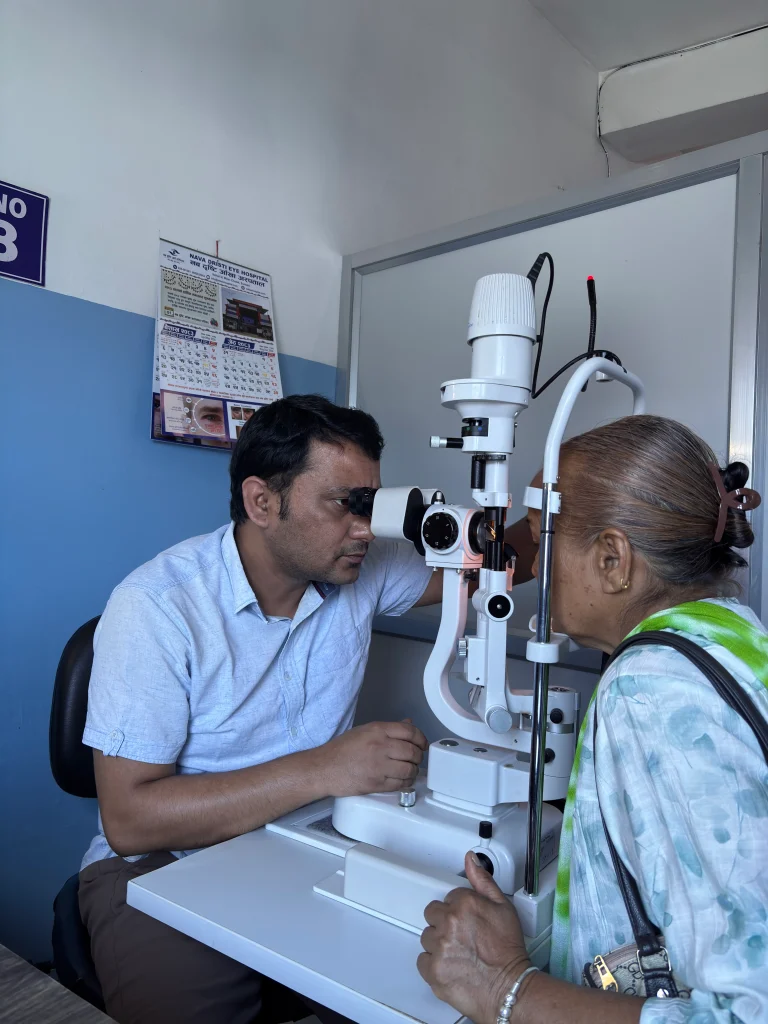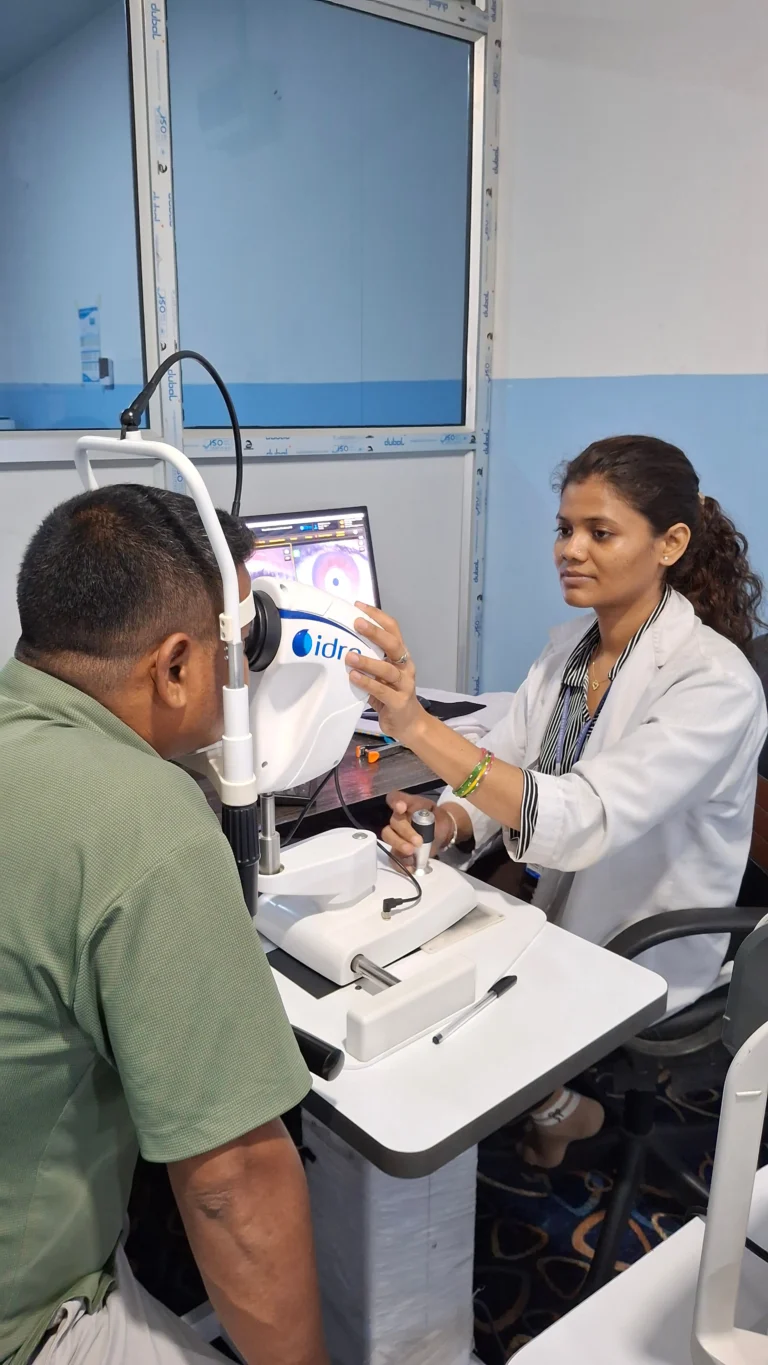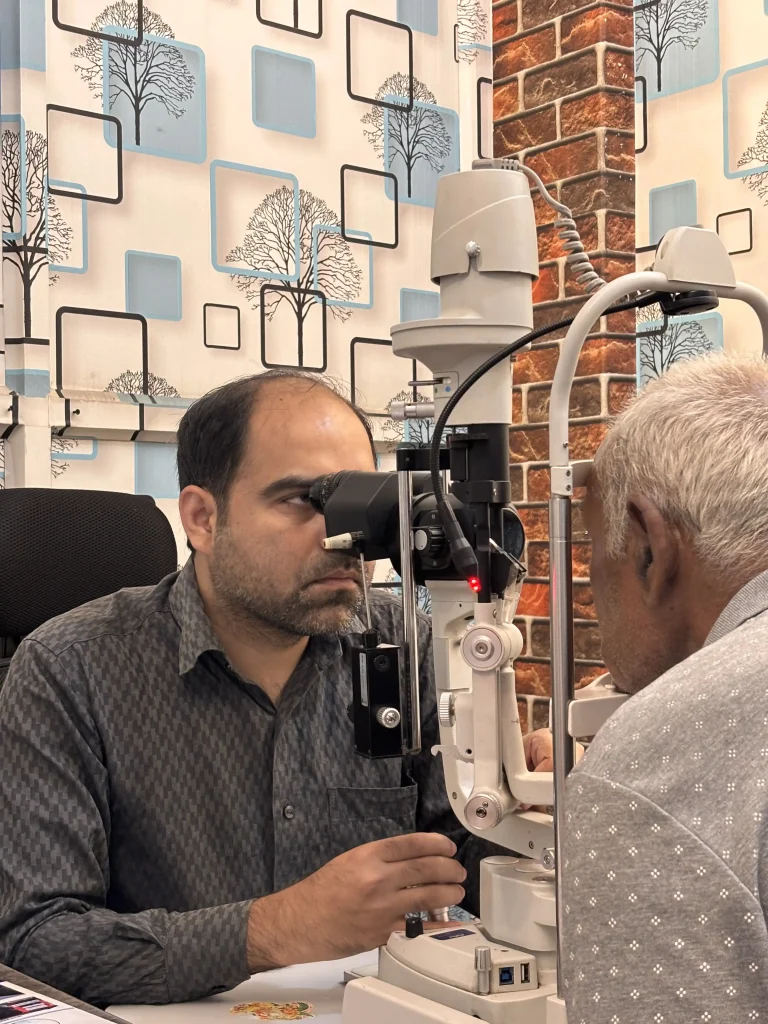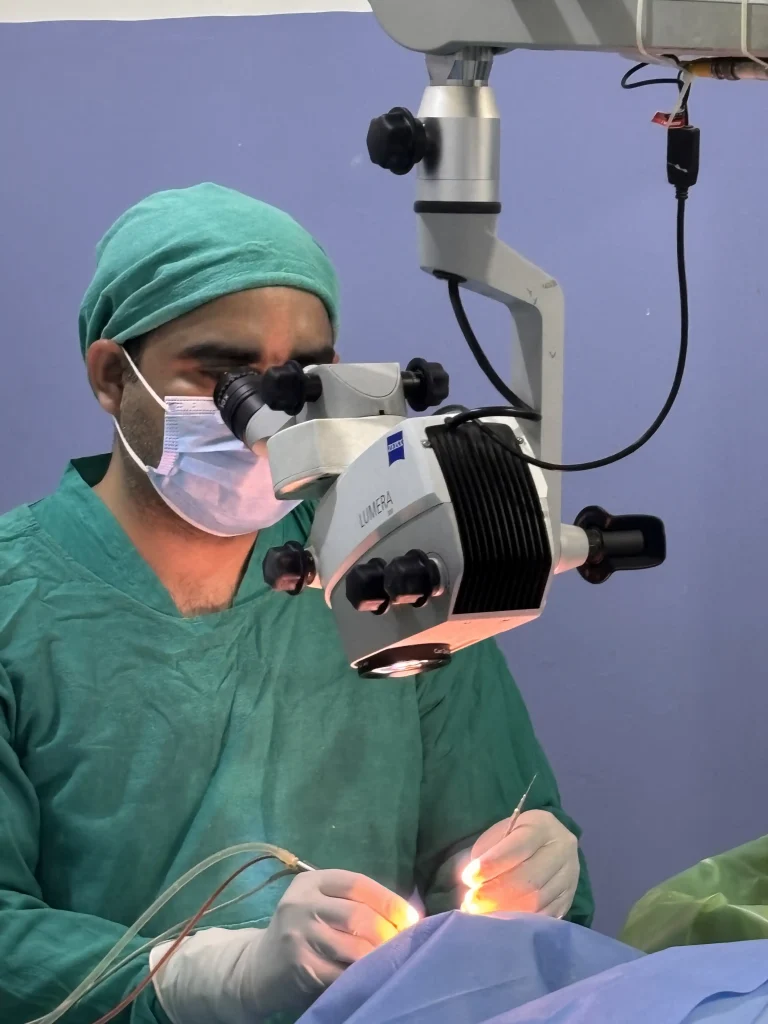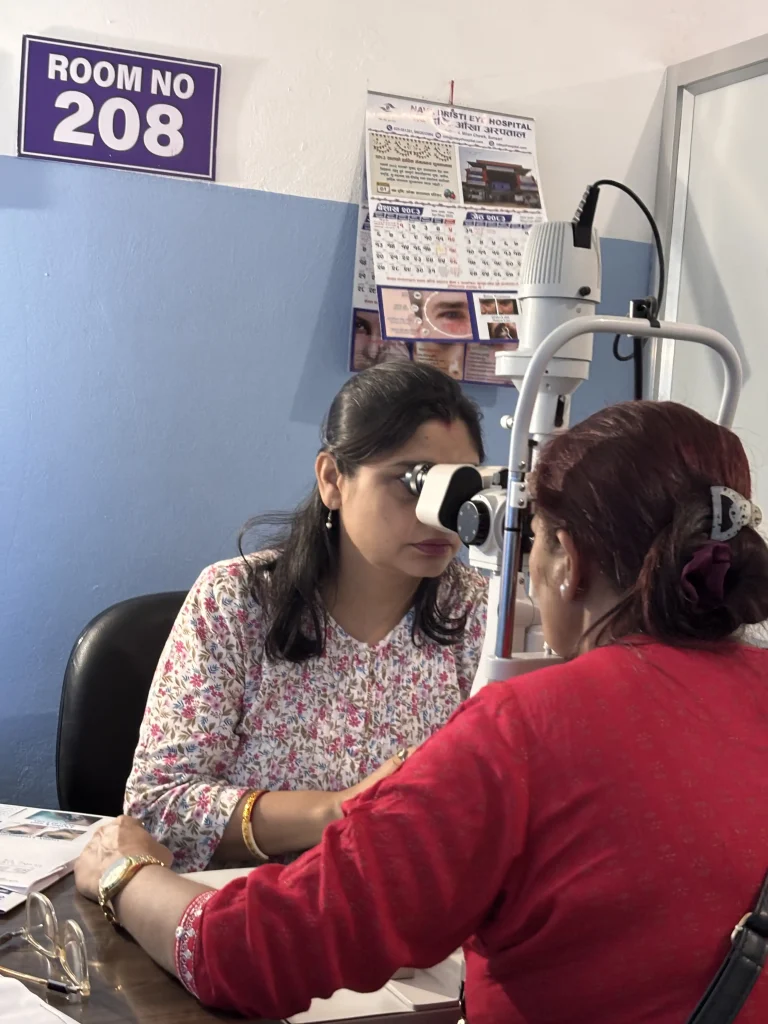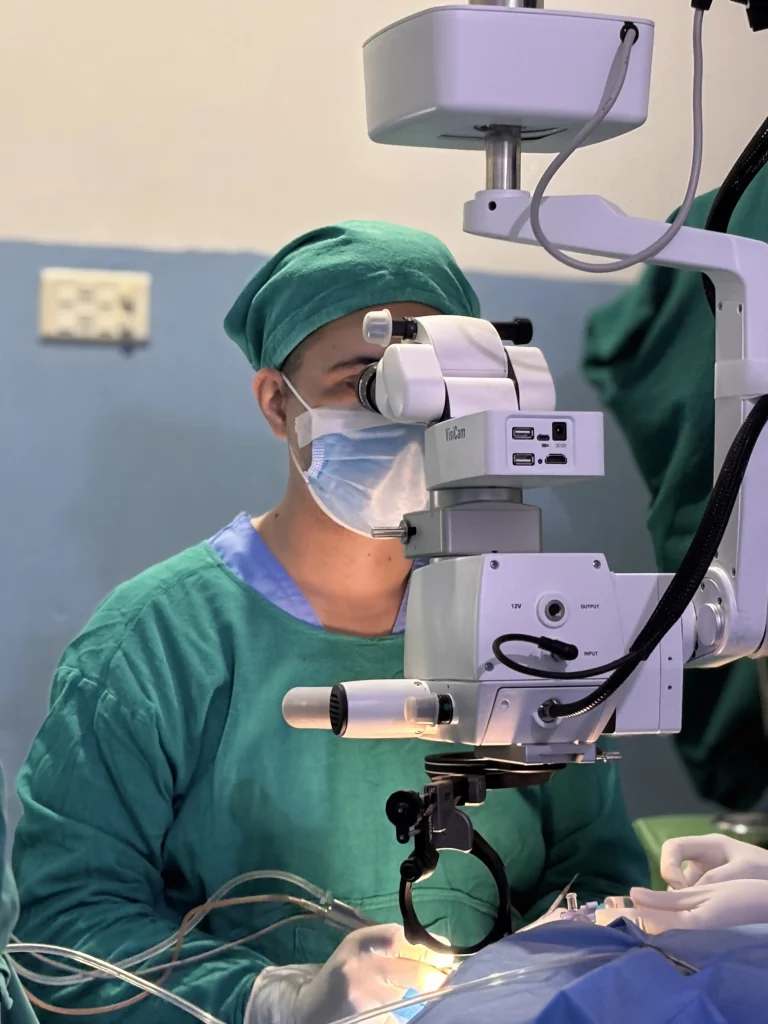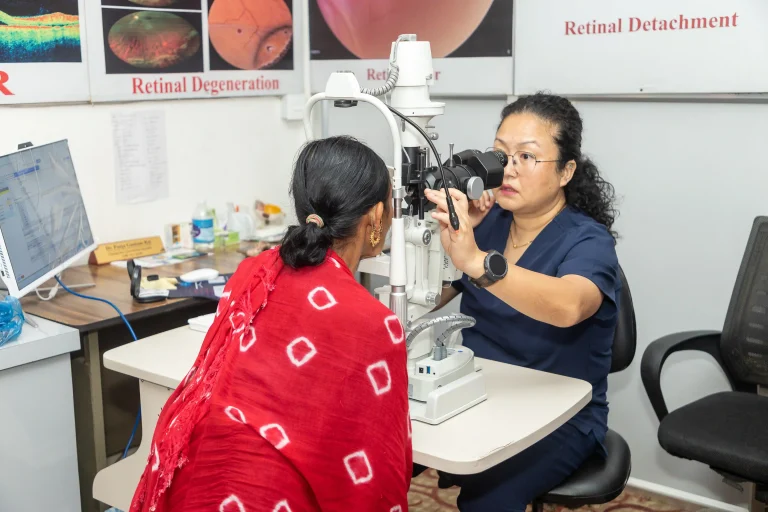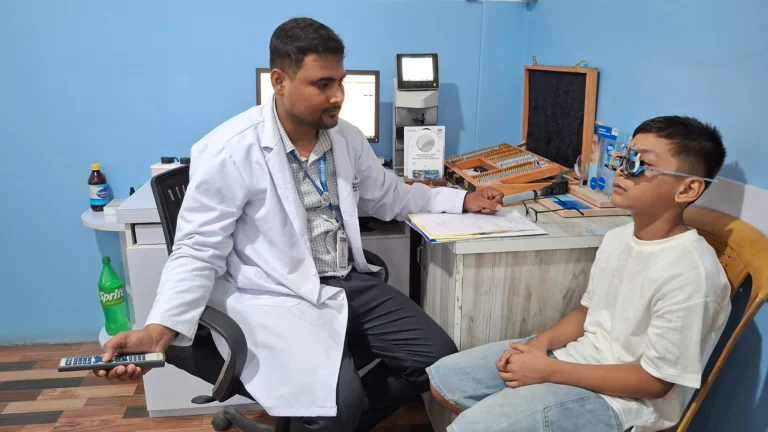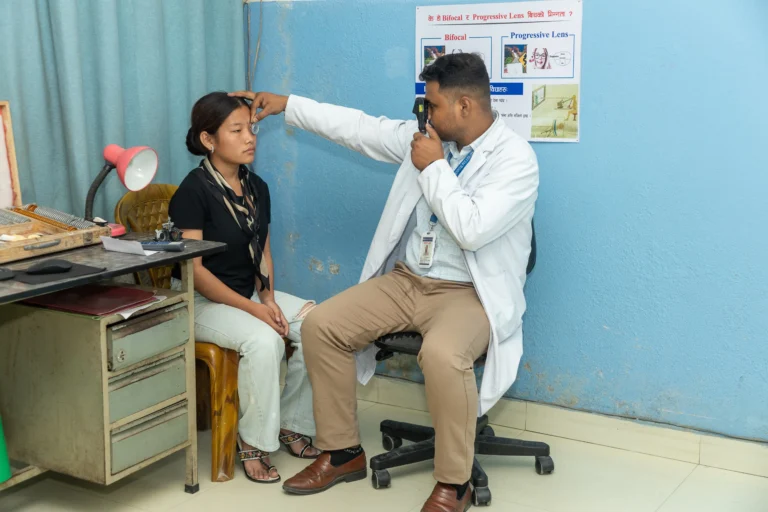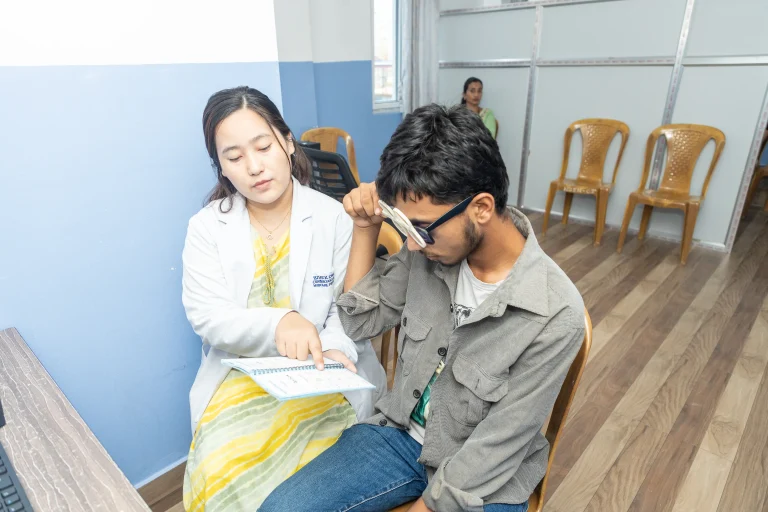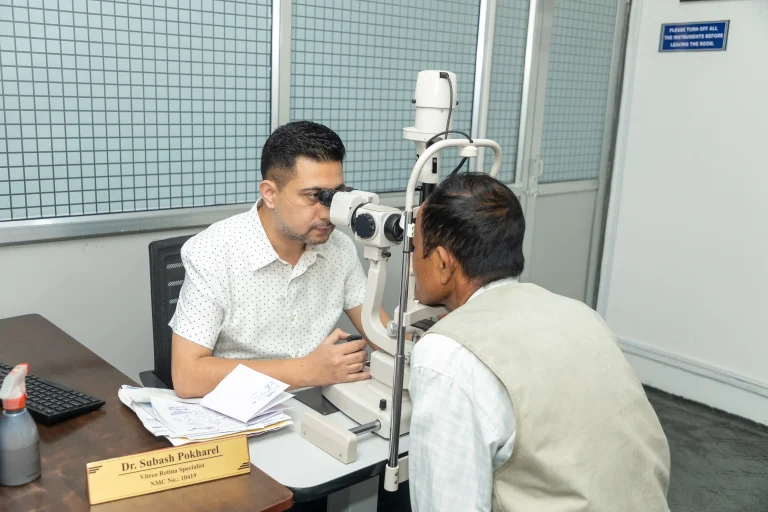



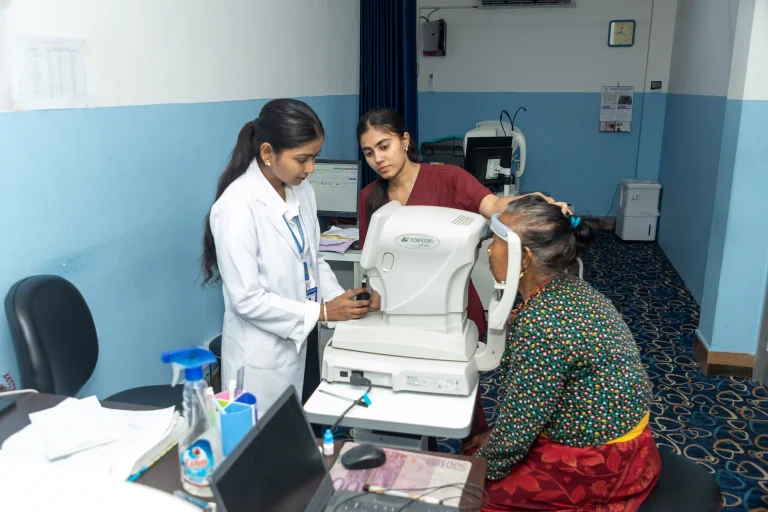
Investigation service at Nava Drisiti eye hospital provides specialized eye investigations.
Service Description
- Optical Coherence Tomography (OCT)
-
- Description: A non-invasive imaging method that uses light waves to take cross-sectional, 3D images of the retina and optic nerve. It is often compared to an ultrasound but uses light instead of sound, providing high-resolution views of each retinal layer.
- Fundus Photography / Retinal Imaging
-
- Description: Creates high-quality digital images of the back of the eye, including the retina, macula, and optic nerve.
- Fluorescein Angiography (FA)
-
- Description: An imaging test that uses a fluorescent dye to highlight blood vessels in the retina.
- Ocular Ultrasound (A-scan/B-scan)
-
- Description: Uses high-frequency sound waves to capture images of the inside of the eye.
- Corneal Topography
-
- Description: A mapping technique used to analyze the surface curvature of the cornea (the outer structure of the eye).
- OCT Angiography (OCTA)
-
- Description: A newer, non-invasive imaging method that maps blood flow in the retina and choroid.
- Automated Visual Field (AVF)
-
- Description: An Automated Visual Field (AVF) test, also known as automated perimetry, is a computer-driven diagnostic tool used to measure the full extent of your peripheral (side) and central vision
- Dry Eye
-
- Description: Dry eye testing involves a comprehensive exam to measure tear quantity and quality.
- Frequently asked question and its answer
-
-
- Do I need to fast before my eye scan?
- No, fasting is not required for most eye imaging tests.
- Will the tests hurt?
- Most imaging tests, such as OCT, are non-contact, painless, and take only a few minutes.
- Will I need my eyes dilated?
- Many imaging tests require pupil dilation to get a clear view of the retina. This can make vision blurry and light-sensitive for 4–6 hours afterwards.
- Can I drive after the test?
- If your eyes are dilated, you should arrange for someone else to drive you home.
- Do I need to fast before my eye scan?
-
Optical Coherence Tomography (OCT) Scan
- What is an OCT scan?
- It is a non-invasive scan that uses light waves to capture detailed, cross-sectional, 3D images of the retina and optic nerve.
- Why do I need an OCT?
- It is used to detect early signs of eye diseases like glaucoma, macular degeneration, and diabetic retinopathy.
- How often should I have an OCT?
- While recommended yearly for high-risk individuals (e.g., diabetics, aged 50+), your doctor will determine the appropriate interval.
- How long does it take? T
- he scan itself takes only a few minutes (5–10 minutes).
Fluorescein Angiography (FA/FFA)
- What is Fluorescein Angiography?
- A test where a fluorescent dye is injected into a vein (usually the arm) to highlight blood vessels in the retina for imaging.
- What does the dye do?
- The dye highlights damaged or leaking blood vessels. It is normal for skin and urine to appear yellow/orange for 24 hours afterward.
- Are there side effects?
- Some patients experience mild nausea or a metallic taste in the mouth for a few minutes.
- Why do I need this test?
- It is essential for diagnosing diabetic retinopathy, macular edema, or retinal vein occlusion.
Other Common Eye Imaging Tests
- What is a Fundus Photo?
- A specialized camera takes high-resolution pictures of the back of the eye (retina) to document and monitor diseases.
- What is a Corneal Topography?
- A non-contact, computerized test that generates a 3D map of the surface of the cornea to diagnose conditions like astigmatism or keratoconus.
- What is an A-Scan Biometry?
- A test that uses ultrasound to measure the length of the eye, typically done to determine the correct lens power for cataract surgery.
- What is a Visual Field Test?
- A test that measures your peripheral (side) vision to check for blind spots, commonly used to monitor glaucoma.
Preparation and Post-Test Care
- What should I bring?
- Bring your glasses, contact lenses, a list of current medications, and sunglasses.
- Can I wear makeup?
- It is often recommended to avoid eye makeup, as it can interfere with imaging.
- How long do results take?
- Results are sometimes available immediately, but often they require analysis and will be discussed at a follow-up appointment.